
Deadlocks
locks on the referenced table (row or table, depending on the configuration).
into account. Remember that the system can choose table-level locking for performance
reasons.
one another to give up locks.
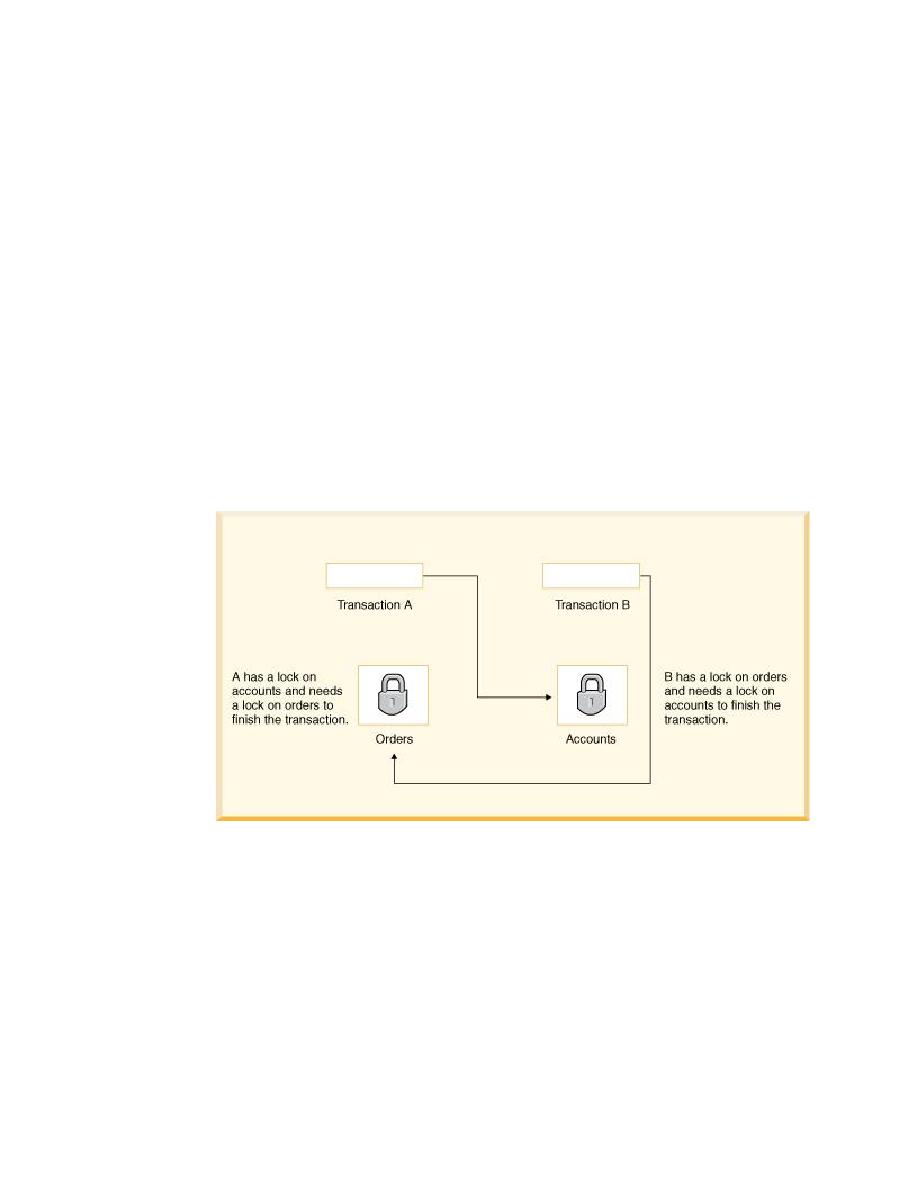
needs to update some rows in the Orders table to finish. Transaction B holds locks on
those very rows in the Orders table but needs to update the rows in the Accounts table
held by Transaction A. Transaction A cannot complete its transaction because of the
lock on Orders. Transaction B cannot complete its transaction because of the lock on
Accounts. All activity comes to a halt and remains at a standstill forever unless the DBMS
detects the deadlock and aborts one of the transactions. The following figure shows this
situation.
level makes it likely that you will avoid deadlocks (both settings are Derby defaults).
However, deadlocks are still possible.
for example, transactions that access Accounts and Orders should always access the
tables in the same order. That way, in the scenario described above, Transaction B
simply waits for transaction A to release the lock on Orders before it begins. When
transaction A releases the lock on Orders, Transaction B can proceed freely.
to lock a table in exclusive mode when it starts to prevent other transactions from getting